With a BA in English literature and an MA in Creative Writing, over the years, I have given a lot of thought to what books to read and which ones have shaped the classical canon and modern literature. I compiled a list of novels, both by English and American authors, that created works of literary art that resonated throughout time. I want to underline the fact that this is just one list of a limited number. There are, of course, many more novels of the 19th century that have defined and shaped the literary world and history. However, this list should give you a good and rounded overview of the English language and its history. If you consider a novel written in the 19th century of equal importance, feel free to drop your thoughts in the comments.
1: Pride and Prejudice by Jane Austen (English, 1813)
Austen’s most famous work, a novel of manners (a novel recreating a social world, detailing the complexity of customs, values, and morals), follows one of the most authentic characters in English literature, Elizabeth Bennet, through all the struggles and joys that come along with being a woman in the early 19th century. (All other novels by Austen, Emma, Persuasion, Sense and Sensibility, and Mansfield Park are also highly recommended.)
2: Frankenstein by Mary Shelley (English, 1818)
Frankenstein, or The Modern Prometheus, is considered the very first science fiction novel, containing elements of the Gothic novel (characterised by mystery, supernatural horror and usually centred around a castle or manor) and the romantic movement. It is also widely seen as the first horror story. Shelley is a master of combining and inventing genres, setting the stage for all science fiction and fantasy stories to come.
3: Oliver Twist by Charles Dickens (English, 1838)
As an early example of the social novel (showing the problems and issues of a society, such as gender, race, class, or prejudice), Dickens paints a truthful and sad picture of child labour and domestic violence during the dawn of the Victorian era. Besides, he creates universal and authentic characters, managing to tell a story that works on every level.
4: Jane Eyre by Charlotte Brontë (English, 1847)
This is a Bildungsroman (which centres around a young protagonist who deals with various problems and grows through them to become a better person, also known as a coming-of-age novel) that revolutionised prose fiction because of its intimate and first-person narration of the main character, giving deep insight into her emotional and spiritual growth. It is considered the best romance novel of all time.
5: Wuthering Heights by Emily Brontë (English, 1847)
As a blend of romantic fiction and a gothic novel, it is considered among the greatest novels of English literature. It is about two families (Lintons and Earnshaws) of the landed gentry on the West Yorkshire moors and their turbulent relationship with the Earnshaw’s foster son, Heathcliff. The novel challenges Victorian morals, deals with domestic violence, religion, and societal values, and excites with a haunting atmosphere throughout.
6: The Scarlet Letter by Nathaniel Hawthorne (American, 1850)
A masterwork of American literature and the first novel to become a bestseller in the States, it tells the story of an unmarried woman getting pregnant and her journey towards a new life of repentance and dignity. As an American social novel, it was considered revolutionary at the time.
7: David Copperfield by Charles Dickens (English, 1850)
One of Dickens’ best works and a Bildungsroman, partly autobiographical, gives the reader a wonderful insight into the moral development of the titular character, David Copperfield, and his journey from childhood into adulthood. Dickens himself regarded this novel as his favourite work, and it is regarded as a triumph of literature.
8: Moby Dick by Herman Melville (American, 1851)
During Melville’s lifetime, this novel was a huge failure. Only during the 20th century did it ascend to become a great American novel. The story is about the character Ahab and his quest for vengeance, hunting down the white sperm whale that crippled him on his previous voyage. Countless interpretations and academic papers have been written on the meaning of this epic story.
9: Uncle Tom’s Cabin by Harriet Beecher (American, 1852)
This anti-slavery novel had a profound impact on attitudes towards African Americans and slavery during the second half of the 19th century. Historians argue that the story was so powerful that it helped lay the groundwork for the American Civil War in society. As a sentimental novel (emotions and feelings of the characters at the forefront), it shows the cruelty and horrific reality of slavery in the United States of America.
10: North and South by Elizabeth Gaskell (English, 1855)
Very often overlooked but definitively one of the great social novels of the Victorian era, Gaskell paints an honest and brutal picture of the differences that evolved during the industrial revolution between the south and the north of England. It confronts the lives of employers and workers, the rich and the poor, and can also be seen as a fictional historical novel, depicting a universal fight between social classes.
11: The Woman in White by Wilkie Collins (English, 1859)
This sensational novel (a novel with a secret that is usually revealed towards the end of the story and is often accompanied by romance) focuses on the treatment of women in the 19th century. It portrays how little power a woman could wield and how vulnerable a woman in society was. This is epitomised by the woman in white, an archetype created in the 19th century, a woman who is supposedly mysterious, crazy, and dangerous but has usually been mistreated and tortured by men.
12: A Tale of Two Cities by Charles Dickens (English, 1859)
A historical novel (a novel where the story is centred around historical events of the past that had profound significance) by Dickens set in Paris and in London, told through authentic characters before and during the French Revolution and the reign of terror. It is considered Dickens’ greatest historical novel and, according to historians, the most sold novel (the first best-seller) of the 19th century.

13: Great Expectations by Charles Dickens (English, 1861)
One of his most celebrated works and his second first-person narrated novel, Great Expectations, is full of excitement, plot twists, and iconic characters such as Mrs. Havisham (another woman in white), the beautiful and cold Estella, or Joe the unsophisticated but kind blacksmith. In the history of literature, such characters evolved into archetypes that can be found throughout pop culture today.
14: Alice’s Adventures in Wonderland by Lewis Carroll (English, 1865)
Another writer who created iconic characters who found their way into pop culture, Carroll’s work is seen as the greatest example of the literary nonsense genre (stories that partly make sense and partly do not). Over time, it became increasingly important for the evolving fantasy genre. Today, it stands as a blend between fairy tales, the obscure, and fantasy.
15: Little Women by Louisa May Alcott (American, 1868)
One of the most beautiful coming-of-age novels, Alcott loosely based her characters on herself and her sisters. It is therefore considered an autobiographical and semi-biographical novel. It tells the story of four sisters growing up, detailing the passage from childhood into womanhood with all its accompanying issues such as love, marriage, heartbreak, work, domesticity, and death.
16: Middlemarch by George Eliot (Mary Ann Evans) (English, 1872)
Seen as one of the greats, some even argue the greatest novel in English literature, the big book that is Middlemarch encompasses a huge narrative, intersecting stories with a lot of characters dealing with all sorts of issues. The status of women, the nature of marriage, idealism, self-interest, religion, hypocrisy, political reform, education, and of course, love. Eliot’s realism in a fictional setting is unparalleled.
17: Far from the Madding Crowd by Thomas Hardy (English, 1874)
Another romantic novel, Hardy’s first success, shows the idyllic but often hard and brutal life of the English countryside and farm life. It is a great example of an early and very dramatic love-triangle narrative that succeeds in every way.
18: The Adventures of Tom Sawyer by Mark Twain (American, 1876)
Considered a masterpiece of American literature, it tells the story of Tom Sawyer and his friend Huckleberry Finn, who experience adventures in the wilderness and countryside of America. (Its sequel, The Adventures of Huckleberry Finn, is considered an even greater novel and is also recommended.)
19: Daniel Deronda by George Eliot (Mary Ann Evans) (English, 1876)
Her final novel is also her most controversial one and counts as an important statement on Victorian society and life. It is a work of social satire and moral search, but it especially stands out for its sympathetic Jewish, proto-Zionist ideas, which were revolutionary at the time.
20: A Study in Scarlet by Sir Arthur Conan Doyle (English, 1887)
This novel introduces two of the most iconic characters of English literature: Sherlock Holmes and Dr. Watson. Together they set out on their first detective journey. They would become icons of pop culture, resonate throughout modern times, and this first novel (one of only four, most others are short stories) is an exciting and well written detective story with incredible plot twists.
21: The Picture of Dorian Gray by Oscar Wilde (Irish, 1890)
Another enormously famous work of literature that has inspired generations of writers and readers, Wilde’s only novel, led to controversy and was highly criticised at the time. As a gothic novel with elements of a philosophical novel, it is about morality, beauty, and sin and paints a clear picture of London’s vain society.
22: Tess of the d’Urbervilles by Thomas Hardy (English, 1891)
One of Hardy’s controversial and criticised works, it challenges the sexual morals of Victorian England and features a heroine who is a fighter and stands up for the rights of others. Originally, it was censored and received mixed reviews. Today, it is considered one of the last great novels of the 19th century.
23: The Red Badge of Courage by Stephen Crane (American, 1895)
A war novel famous for its realism and naturalism, it is considered a major American text. Taking place during the American Civil War, it is distinctive in its style, concerning realistic battle scenes that lack heroism, and are rich in irony. Crane reflects the inner experience of the protagonist (a soldier fleeing from combat) and describes the levels of the character’s mind. It is a masterwork at depicting ‘the psychological portrayal of fear’.
24: The Time Machine by H. G. Wells (English, 1895)
This is the very first science fiction novel featuring a time machine and dealing with the concept of time travel and all the consequences and possibilities that come with that. While today, the novella might be regarded as slow in pace, at the time, it was a revolutionary and exciting story. It still stands as an iconic story and as the cornerstone of science fiction literature.
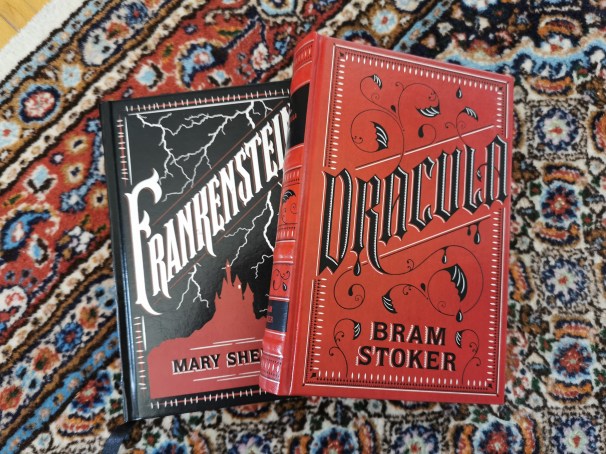
25: Dracula by Bram Stoker (English, 1897)
An epistolary novel (a story written in a series of letters), needing no introduction, that stands as a cornerstone of horror and fantasy literature but is ultimately considered a Gothic novel. Stoker created a timeless villain at the turn of the century. The controversial aspects of the novel are sexuality and desire. Throughout the last hundred years, stories about vampires have become their own genre, and today, they are the most iconic creatures of the night.
 Fabian's Writing